Health & Safety Policy — Commercial Waste Milton Keynes Services
 Purpose: This Health and Safety policy sets out the commitments and practical measures adopted by our rubbish and commercial waste services to safeguard employees, contractors, clients and the public. Our objective is to prevent injury, ill health and environmental harm by integrating safe systems of work into daily operations for all commercial waste collection, transfer and disposal activities. This document outlines responsibilities, risk management, training, equipment standards, and emergency procedures applicable across our service area.
Scope and Application
The policy applies to all personnel involved in commercial waste collection, recycling, transfer station operations and associated transport logistics. It covers routine rubbish collection, scheduled bulky waste removal, on-site skip services and bespoke commercial waste management solutions. All staff and subcontractors must follow this policy and related procedures, irrespective of role or location within the service area. Compliance with this policy is mandatory and forms part of contractual terms for operative engagement.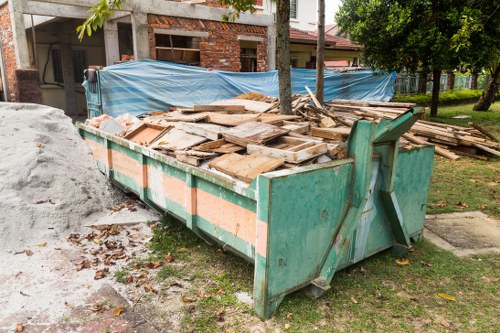
Principles
Our approach is based on the following principles: prevention of harm, continual improvement, legal compliance and clear accountability. We actively promote a safety culture where hazards are reported, controls are applied, and safe behaviours are encouraged. Risk control follows a hierarchy: elimination, substitution, engineering controls, administrative controls and personal protective equipment (PPE). Regular review ensures controls remain effective as operations change.Responsibilities: Leadership at all levels must demonstrate commitment to health and safety. Management will provide resources, training and supervision while supervisors and team leaders are responsible for day-to-day enforcement of safety procedures. Employees and contractors must take reasonable care for their own safety and that of others, report hazards and cooperate with risk management measures. Accountability is reinforced through documented roles, regular safety briefings and performance monitoring.
 Risk Assessment and Safe Systems of Work: Written risk assessments are maintained for all regular activities and site-specific work. These assessments identify hazards associated with manual handling of bins, vehicle loading and unloading, working at height for waste compactors, handling potentially hazardous substances, and interactions with members of the public. Controls are implemented through safe systems of work, method statements and permit processes where appropriate. Regular reviews are scheduled after incidents, near misses or when operational changes occur.
Training and Competence: Staff receive role-specific training before they undertake work, including induction, manual handling, vehicle operations, use of lifting gear and segregation of recyclable and hazardous waste. Ongoing competence is verified through assessments, toolbox talks and refresher courses. Training records are retained and used to plan further development and address identified gaps in knowledge or skills.
Personal Protective Equipment and Equipment Standards
PPE provision is based on risk assessment and includes gloves, high-visibility clothing, steel-toe footwear, eye protection and respiratory protection when required. Equipment such as compactors, balers and lifting devices are subject to planned maintenance and pre-use checks. Vehicles used in rubbish collection are maintained to a high standard with daily checks for lights, braking systems and secure loading. Defective equipment must be taken out of service immediately and reported.Hazardous Waste and Chemical Safety: Where commercial waste includes hazardous items, segregation, containment and documentation requirements are strictly observed. Employees handling such materials receive COSHH-style information and instruction on safe handling, spill response and disposal procedures. Emergency spill kits and suitable containment measures are maintained at transfer points and on vehicles. Only trained personnel should manage hazardous waste streams or use chemical agents.
Incident Reporting and Investigation
All incidents and near misses must be reported promptly using the company reporting system. Investigations focus on identifying root causes and implementing corrective actions to prevent recurrence. Records of incidents, investigations and remedial actions are retained and reviewed as part of the continual improvement process. Where regulatory notification is required, management will ensure timely compliance with reporting obligations without divulging sensitive operational details.Vehicle and Traffic Management: Safe operation of collection vehicles is critical. Drivers must be licensed and trained in vehicle loading, reversing procedures and use of safety equipment. Traffic management at sites and customer premises is enforced through clear signage, cones and where necessary trained traffic marshals. Loading plans are used to prevent overloading, unsecured loads or dangerous shifts of waste during transit.
Health Surveillance and Welfare: Where roles expose staff to specific health risks (e.g., prolonged vibration, bioaerosols, noise), health surveillance or monitoring is provided in line with risk assessment outcomes. Welfare facilities, rest breaks and provisions for hydration are maintained to support staff wellbeing during shifts. Mental health awareness and access to support resources are promoted as part of employee welfare measures.
Review and Continuous Improvement: This policy is reviewed at least annually or following significant operational changes, serious incidents or legislative updates. Performance is monitored through safety audits, inspections and key performance indicators. Improvements are tracked and acted on to raise standards across the commercial waste management service area. Everyone has a part to play in maintaining a safe workplace and protecting the communities we serve.
